


How to Compare a Fence Quote: A Homeowner’s Scope Guide

When you receive a fence quote, start by checking exactly what the total buys. Two proposals can cover the same boundary and still include different materials, gates, removal or finish work. A useful comparison puts those differences in writing before you choose the project.
This guide is for Rio Grande Valley homeowners reviewing received proposals. If your visit is still ahead, use our estimate-preparation guide. If you are deciding what should be repaired or replaced, start with the repair-versus-replacement guide.
Updated October 15, 2026.
Make the proposed fence line comparable
Put the proposals beside the same sketch. Identify each fence run, corner, transition and gate opening. Check which sections will remain and which will be removed or installed. If the measured lengths differ, ask the contractors to explain the difference before comparing totals.
A price described as “per foot” needs context. Ask whether the quoted quantity covers fixed fence sections only or includes gate openings, and which separate items sit outside that line. Keep gate work, removal and finish visible in the comparison rather than dividing every total by a length that may represent different work.
The Federal Trade Commission recommends written estimates describing the work, materials, completion date and price, and asking for an explanation when estimates differ substantially.
Replace broad material labels with a clear description
“Wood privacy fence” describes a category, not every component. Ask the proposal to identify the proposed boards or panels, posts, rails, dimensions and finish, with the actual product or grade where relevant. For chain link or ornamental metal, ask for the equivalent description of fabric or panels, posts, coating and hardware.
For example, YellaWood’s product guidance distinguishes lumber grades and treatments. It explains that its end tags identify intended applications such as above-ground or ground-contact use. A general “treated wood” label alone does not identify the proposed product. Ask the contractor to match the specification to the actual use.
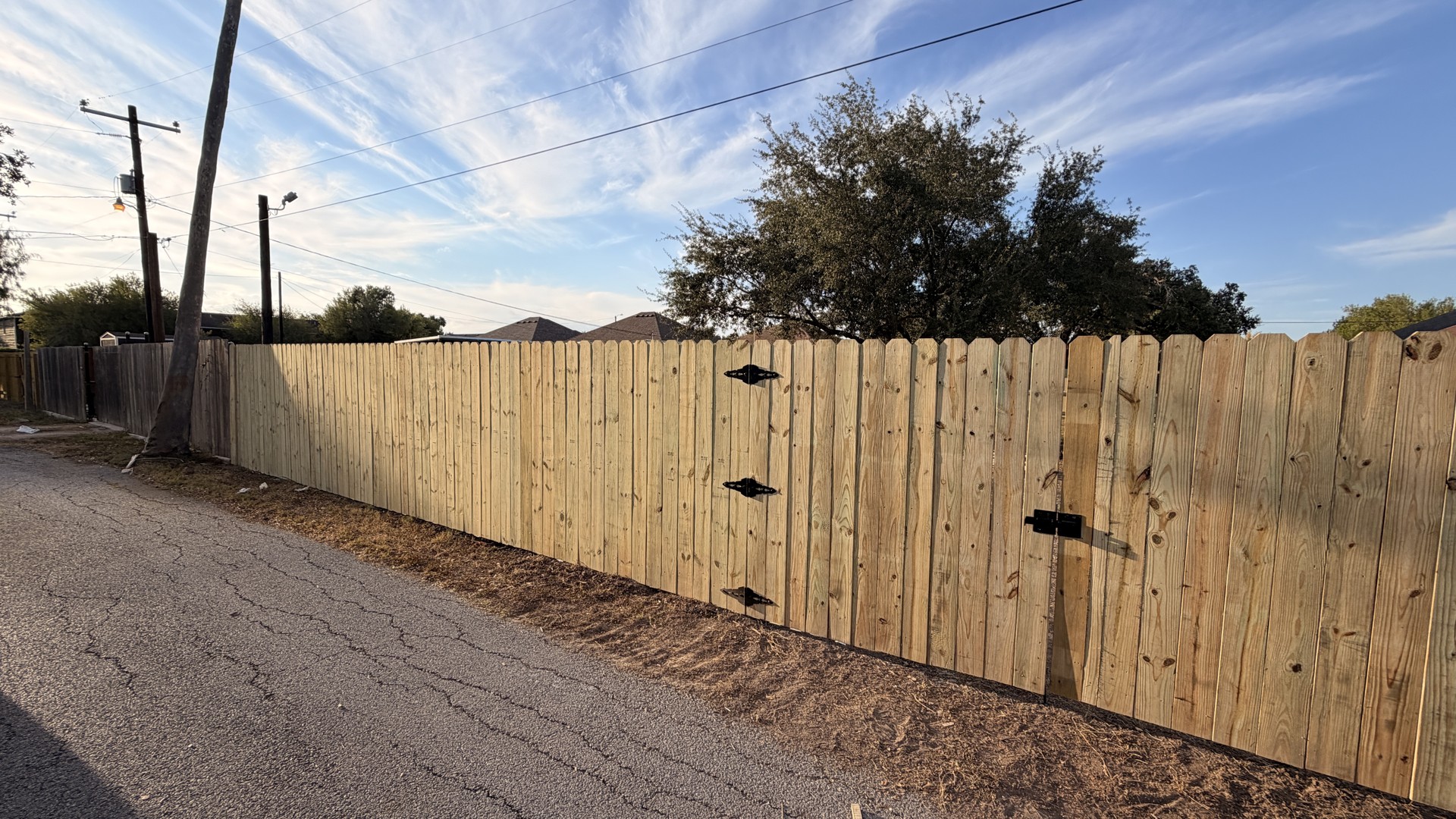
Use photographs to explain the appearance you want, then compare the written material description. A finished photograph cannot establish the wood species, treatment, buried supports or other hidden specifications.
Give gates, removal and finish their own scope
Check the number of gates, their intended openings, frames, hardware and operating method. “Gate included” leaves questions if one proposal keeps an existing gate and another supplies a replacement. If powered operation is proposed, identify that separate scope; our corrected gate comparison explains the movement and operation choices.
For removal, clarify which existing materials are coming out, what happens to old posts or concrete, and who handles haul-off and cleanup. For finish work, confirm which surfaces are included and whether staining, sealing or painting is part of this proposal or a separate item. Ask the contractor to identify which tasks are included in your written estimate.
Compare two proposals for the same fence line
Illustrative example only: suppose two written proposals describe a wood fence along the rear boundary.
- Proposal A: new fixed fence sections, existing walk gate retained, and old fence removal and haul-off excluded.
- Proposal B: new fixed fence sections, a replacement walk gate, and contractor removal and haul-off of the old fence.
Those proposals describe different work even before you compare materials or totals. Ask for revisions covering the same desired option. If you want to retain the gate, compare versions that retain it. If you want a replacement gate and removal included, request that scope from both.
Separate included work, allowances and unresolved items
For each item you care about, mark it as included, excluded or needing clarification. Treat an unmentioned task as an unanswered question until the contractor confirms its treatment in writing.
If a line is called an allowance, ask what product, quantity or condition it covers and how any difference would be handled. Ask which site conditions could change the proposal and how a change to the work or price would be approved. Resolve the proposed revision before the changed work begins.
The Texas Attorney General’s consumer guidance recommends detailed written bids and recording promised work in the agreement. Keep any accepted revision with the final scope rather than relying on a conversation alone.
Read the total and the next steps together
- Total: are the items you selected, applicable charges and any stated travel or delivery costs accounted for?
- Timing: what start and completion expectations are stated, and what approvals, selections or availability remain unresolved?
- Terms: what payment milestones, proposal-validity period, care instructions and written warranty terms, if offered, apply?
- Responsibility: who handles the listed preparation, approvals and other tasks assigned to the homeowner or contractor?
Request a dated final version that reflects your selected materials, gate decisions and revisions. Keep the scope, relevant sketch and written answers together so you can refer to the same agreement as the project moves forward.
Explore our fence and gate services and RGV service areas. To discuss your project, call Guerrero Fences at (956) 904-0308. If your city is listed in the estimate-booking form, you can schedule a visit online; for other served RGV cities, send an estimate request.