


Fence Styles for RGV Homes: Compare Privacy, Visibility and Layout

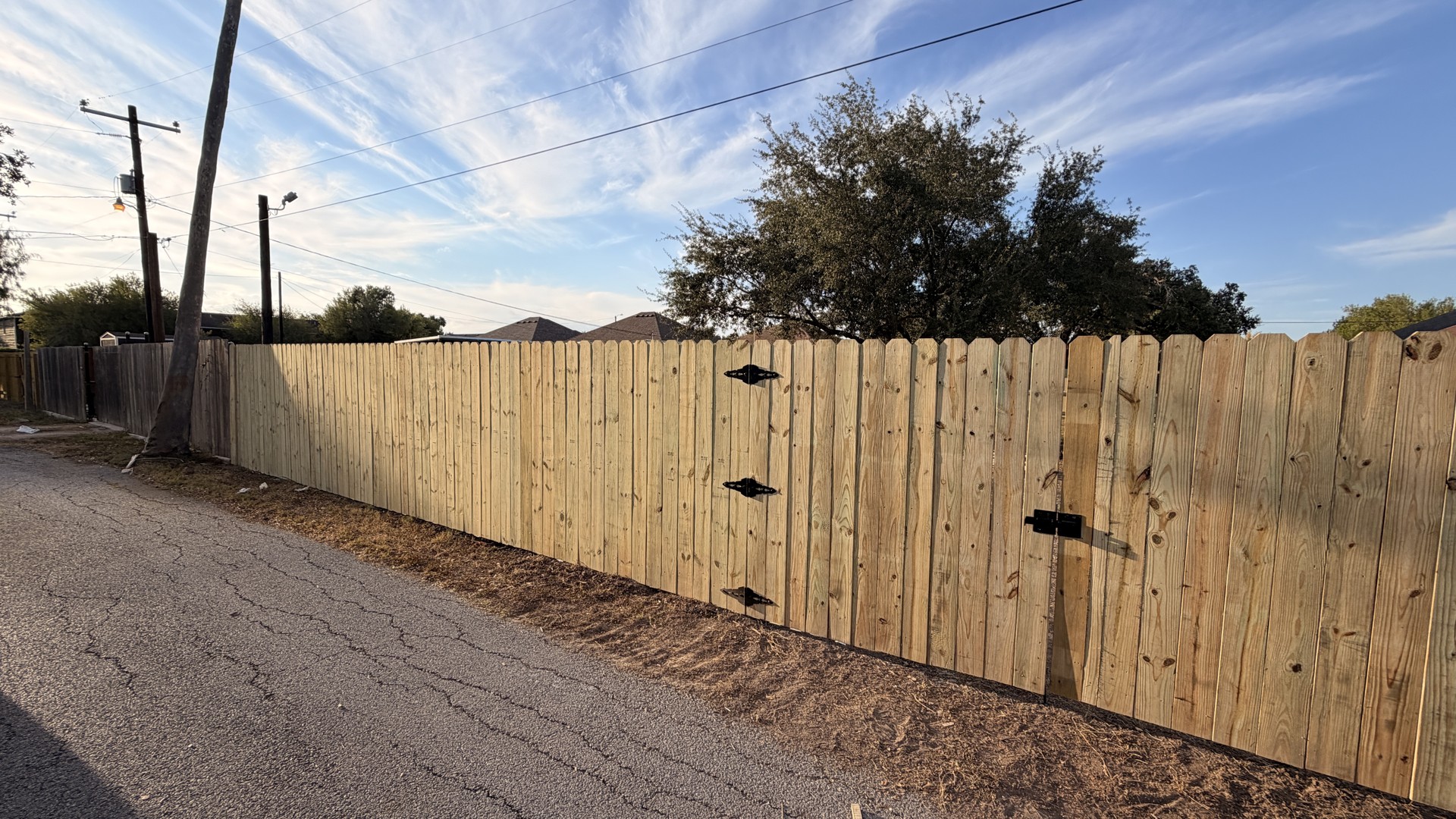
A fence style is more than a material name. Wood, block and chain link describe materials or systems; the arrangement, openings, top line and finish shape what you see from your yard. Start with the view you want to change, then compare designs that address that particular view.
This guide helps Rio Grande Valley homeowners discuss privacy, visibility and appearance before choosing a layout. A style photograph is a useful reference, but it does not establish a fence’s hidden supports, performance or suitability for your property.
Updated October 20, 2026: revised to distinguish materials from layouts and reflect current installation services.
Decide where you want privacy and where you want a view
Identify the specific places that matter: a sitting area, a side-yard passage, the driveway or a view from a window. A boundary that looks closed from the street may look different from a higher window or at an angle.
Mark privacy priorities on a simple yard sketch. Also mark views you want to keep, such as an open rear outlook. You may want different treatments on different runs rather than one appearance around the entire property. Ask how those sections would meet at corners and gates.
If pets or children are part of the discussion, describe their needs separately. A decorative style label alone does not establish suitable openings, gate hardware or supervision arrangements.
Compare the board arrangement on a wood fence
For a wood fence, ask to see both faces and a simple view from above. Compare these arrangements as design questions, rather than assuming a name guarantees a particular result:
- Boards beside one another: What spacing is proposed, and what appearance changes should you expect as the wood dries? Which face shows the rails and posts?
- Overlapping boards: Where does the overlap occur, and how are corners, ends and gate seams handled? Review the actual detail instead of assuming every sightline will disappear.
- Boards on alternating faces: Look straight on and from an angle on each side. Ask which openings remain visible and whether that matches your privacy goal.
Names need context. For example, Eastern Wood Fence’s board-on-board range includes a model called Shadowbox. A product drawing and an agreed description are more useful than a label alone. These are comparison ideas; confirm the layouts and materials available for your project.
Compare a closed face with an open boundary
Wood is only one starting point. For a block boundary, discuss the visible wall finish and its transitions to gates or existing structures. For chain link fencing, decide whether the open mesh appearance fits the views you want to retain.
A custom metal gate also needs its own appearance discussion: the openings, visible frame and relationship to the adjoining fence. Bring a reference for the look rather than assuming one photograph identifies the metal, coating or construction.
Ask for a site review before adding screening to an open fence. Changing the appearance is a separate decision from confirming that the existing system is appropriate for the proposed change. Do not choose a style by an unsupported “storm-proof” or maintenance-free promise.
Plan the top line, both faces and gates together
Compare vertical and horizontal visual lines, board-top shapes and trim in the context of your home. Then look beyond the front face. Ask what the yard side will show and how visible posts, rails and hardware fit your preference.
Walk through changes in ground level and the places where the fence meets a wall or another fence. Ask how the proposed design will look there, including any gaps below it.
Include each gate in the same conversation. Matching the board pattern does not answer how an opening works. Our gate comparison guide explains the separate questions of gate movement and operation.
Include appearance care in the choice
Ask how the proposed surface should be cleaned, inspected and refinished, and who will maintain each face. Decorative details are easier to evaluate when you also understand how to reach them for care.
YellaWood’s finishing guidance explains that wood expands when wet and contracts as it dries. Its finishing advice depends on the product and the wood being sufficiently dry. For your fence, request instructions for the actual lumber and finish rather than following a universal calendar interval.
A stain sample or finished photograph can help communicate color preferences. It does not identify the exact product used or promise that a new section will match an older fence.
Bring two references and explain what you like
Choose one or two examples and annotate them: “I like this top line,” “I want fewer views through this section,” or “I want the gate to match.” Include a photo of the existing boundary so the discussion connects the style to your property. Use our written-quote comparison guide when reviewing the resulting scope.
Guerrero Fences is currently installing wood, block and chain link fences, plus custom metal gates across the RGV service area. Confirm the particular design during your estimate.
For a city listed in the booking form, choose an available in-person estimate visit and pay $20 online. Confirmation follows verified payment and a calendar check. The $20 is credited once toward your final project quote when work starts. Phone or email estimates using measurements you provide or satellite measurements are free.
For other served RGV cities or a remote estimate, contact our team or call (956) 904-0308. Any travel costs are discussed in the estimate.