



Auger or Hand Digger? Planning Fence-Post Excavation in the RGV

Updated November 3, 2026: This guide replaces earlier broad claims about easy digging and guaranteed hole consistency with site-planning questions and current utility-safety sources.
For a fence project in the Rio Grande Valley, the useful question is not simply whether an auger is faster than a hand digger. It is which excavation method fits the planned fence, access route, ground conditions and underground utilities. A tool choice alone does not establish a suitable post foundation.
Use this guide to discuss the digging portion of a wood fence or chain-link fence estimate. It is a planning checklist, not equipment-operating instructions or a foundation design.
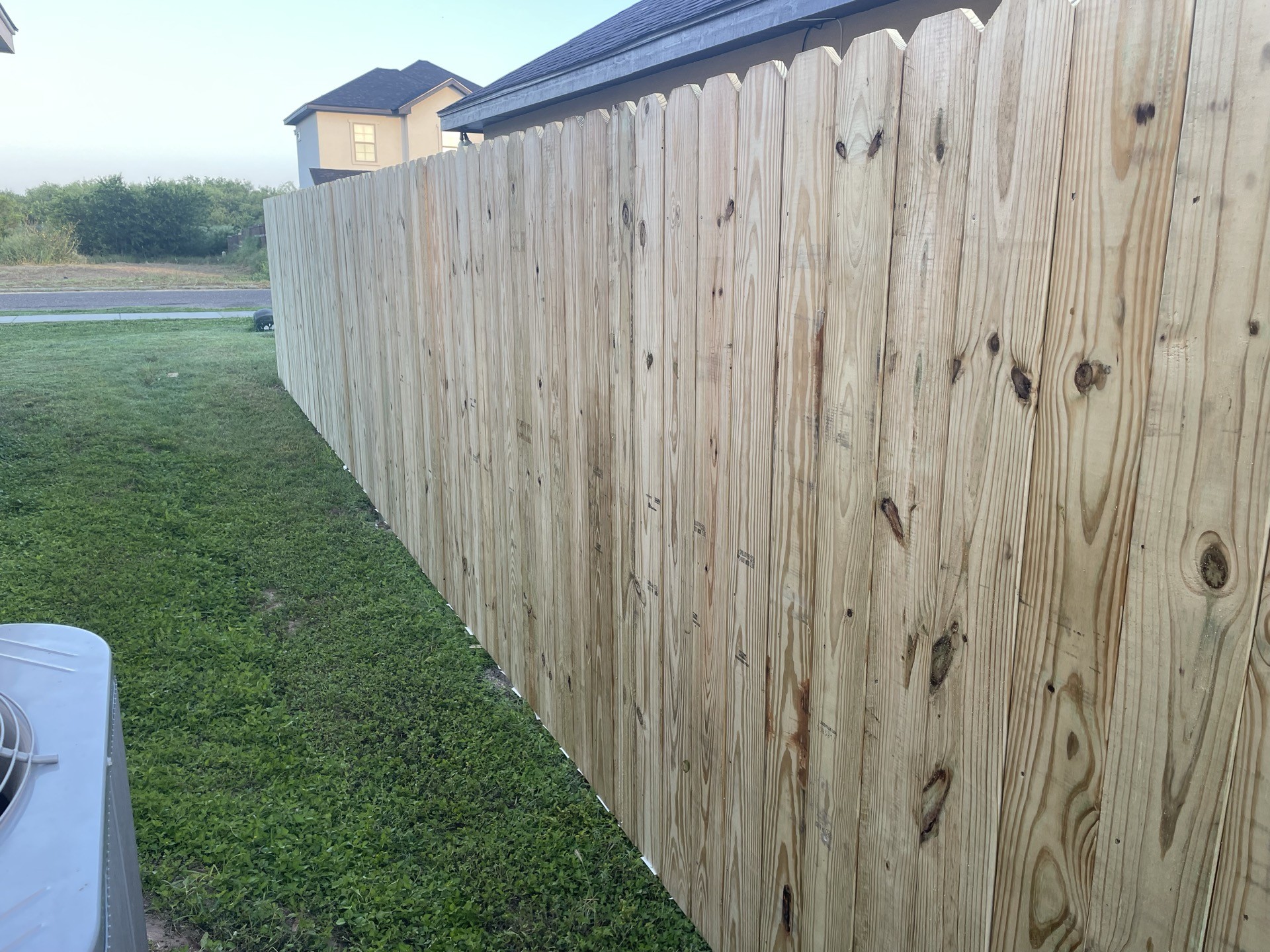
Featured photograph: a completed wood privacy fence in Weslaco. This finished-project example does not show excavation or identify the tools or foundation details used. View the project gallery.
Start with utility coordination, even for hand digging
Texas811 includes building or repairing a fence among projects that require advance contact. Before excavation, agree who will arrange the locate request, check the ticket and responses, and coordinate the planned work area. Follow Texas811’s current notice and response instructions; an estimate appointment is not clearance to begin digging.
The Texas811 FAQ also covers hand digging and explains that some privately owned underground lines may not be marked by public utilities. Tell the team about known irrigation, private power or other buried lines, and discuss whether separate locating is needed. An unmarked yard or a satellite image does not establish that an area is clear.
Compare methods without assuming every auger is alike
A powered auger rotates a digging bit. A manual clamshell post-hole digger removes soil between two blades. Both descriptions leave out the most important detail: the actual tool, operator and site conditions.
For example, Little Beaver’s equipment FAQ makes its drilling capabilities dependent on the model, auger size and soil. That is a reason to ask how equipment will be selected for your site, rather than assume that more power solves every obstruction. It is not a statement that Guerrero Fences uses that manufacturer’s equipment.
Hand excavation may form part of a site-specific plan, but it is not a substitute for utility coordination or trained judgment. Avoid choosing either method solely from a rental price or the number of holes.
Show the access route and existing obstacles
Send photos of the route from the street or driveway to the fence line, including narrow gates, steps, slopes and paved areas. Mention existing concrete footings, trees, visible roots, drainage features and nearby structures. Explain whether old posts will be removed or retained; those are different scopes to discuss.
Photographs help identify questions for a visit, but they cannot reveal everything below the surface. Ask how an unexpected obstruction would be assessed, documented and discussed before the scope changes. Do not assume every RGV property has the same ground conditions.
Keep equipment safety separate from speed claims
The General Equipment 235H two-person hole-digger manual describes strenuous work and torque or kickback hazards, including unexpected contact with buried obstructions. Those warnings apply to that equipment design; they do not establish instructions for another machine.
A homeowner comparison cannot replace the applicable operator manual, training or site assessment. Ask the installer how equipment access and work-area separation will be managed. Keep children and pets away from the work area, and agree how unfinished areas will be secured between work periods.
Ask what the excavation scope includes
- Who confirms the fence layout and planned post locations before excavation?
- What information supports the proposed post and foundation details?
- Does the scope include old footing removal, spoil handling and cleanup?
- How will pavement, planting areas and access routes be protected or restored?
- How will unexpected conditions and any proposed extra work be approved?
A consistently shaped hole is not proof that its dimensions or support are right for a particular fence. Ask for project-specific details rather than a universal depth or diameter rule. For the wider written scope, see our fence quote comparison guide.
Discuss your RGV fence project with Guerrero Fences
Current installations include wood, block and chain-link fences plus custom metal gates. Phone or email estimates using your supplied measurements or satellite measurements are free. An in-person measuring/estimate visit costs $20, credited once toward your final project quote when work starts.
For a city listed in the booking dropdown, you can pay $20 to request an in-person estimate visit online; confirmation follows verified payment and a calendar check. For other served RGV cities or an undecided scope, use our contact form. Any travel costs are discussed in the estimate. Call (956) 904-0308 with project questions.