


Pressure-Treated Wood Fences: A Guide for RGV Homeowners

Updated October 27, 2026: This guide now focuses on treatment labels, intended exposure and product-specific care. Earlier broad promises about lifespan, reduced maintenance, savings and property value have been removed.
If you are planning a wood fence in the Rio Grande Valley, “treated” is a starting point for a materials conversation. Ask what treatment is specified, which components receive it and whether each product suits its intended location. A material label is more useful than a promise that every treated fence performs the same way.
What does pressure-treated wood mean?
Pressure treatment introduces a preservative into wood using a pressurized process. Manufacturer YellaWood explains the process in relation to protection against fungal decay and termite attack. The actual product and its intended use still matter. Treatment is not a description of the fence style or a reason to skip a care discussion.
Ask about posts, rails and pickets separately. A proposal that says “wood fence” does not, by itself, tell you the species, treatment or finish of every component. Guerrero Fences can review those material details with you when preparing the scope for your wood fence project.
Match the product to its exposure
The American Wood Protection Association’s Use Category System starts with expected service conditions, then considers the product, wood species and preservative. That is why “treated” alone is not a complete specification.
Tell your estimator which components will touch soil and point out places that stay damp or are difficult to maintain. Ask whether the proposed material is suitable for those conditions. An above-ground label should not be treated as permission for every ground-contact application. The manufacturer’s label and applicable project requirements need to guide selection.
Read the end tag, not just the lumber’s color
For wood identified as compliant with AWPA standards, the AWPA specifier guidance describes useful end-tag information:
- The applicable standard and use category.
- The preservative name or code.
- The preservative retention, interpreted for that preservative and application.
- The treating manufacturer and location.
Ask for the relevant product information or a clear label photo when reviewing materials. A larger retention number is not a universal score for comparing unrelated preservatives. Keep the information with your proposal so future care questions can refer to the actual product.
Plan compatible hardware and a finish
Posts and boards are only part of the discussion. Ask which fasteners and connectors are compatible with the specified treated lumber. Follow the lumber and hardware manufacturers’ recommendations rather than assuming any outdoor screw or fitting is appropriate. YellaWood’s product FAQ directs users to manufacturer guidance for fastener selection.
Treatment also does not settle when a stain, sealer or paint should be applied. YellaWood’s finishing guidance explains that drying and coating readiness vary with the product and conditions. Follow the actual lumber and coating instructions; a fixed waiting period is not suitable for every product. Ask who will apply any finish, whether it is included in the quote and what future care the selected products require.
Questions to bring to your fence estimate
- Which species and treatment are proposed for the posts, rails and pickets?
- Which components are intended for ground contact or other relevant exposure?
- What product labels or manufacturer information will be available?
- Which fasteners, connectors and gate hardware are specified?
- Is finishing included, and whose instructions will guide timing and care?
- What written warranty, if any, applies to the actual materials and installation?
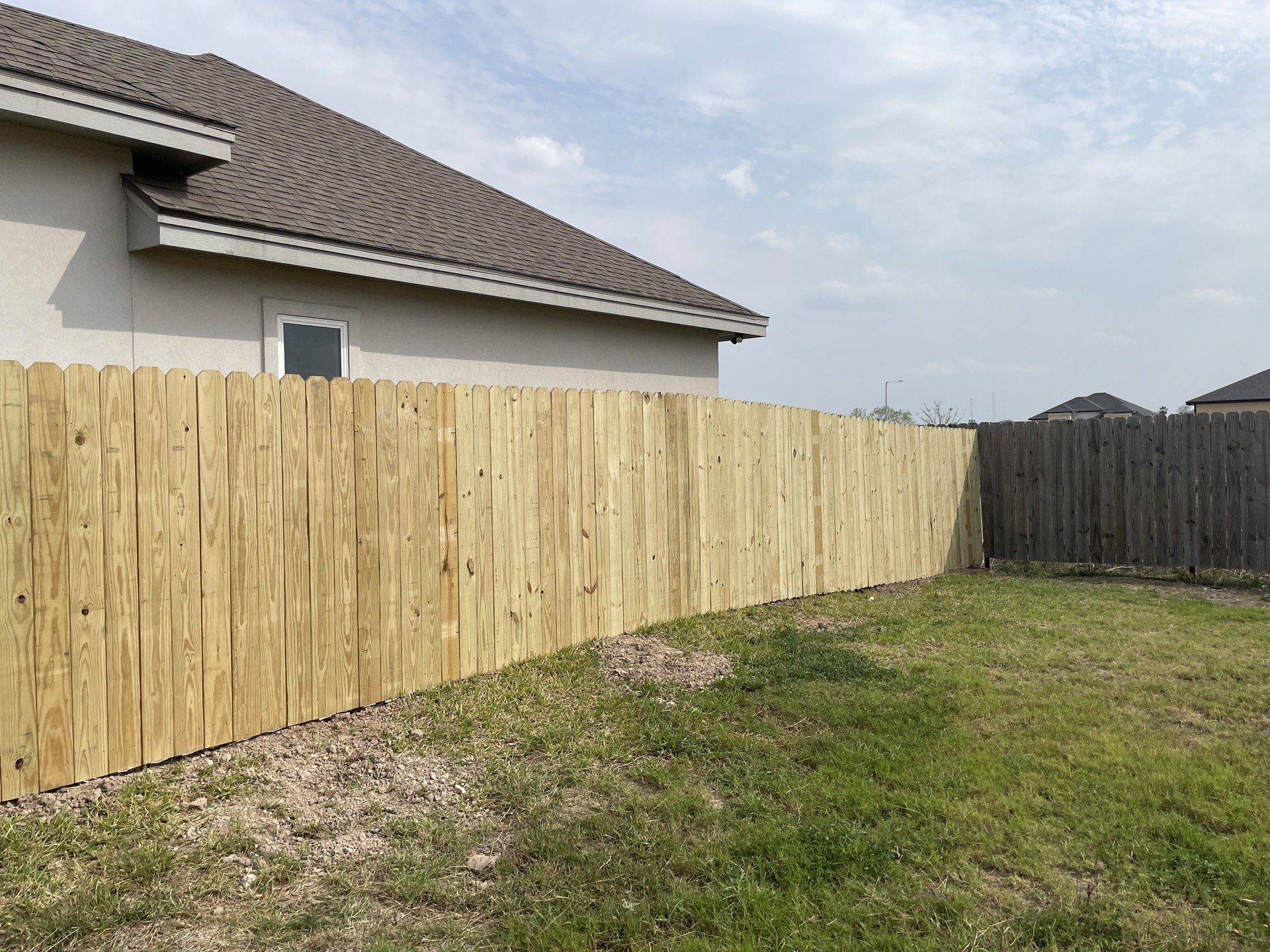
For an appearance example, see our McAllen wood privacy fence and walk-gate gallery. The company photograph shows a real fence layout; it does not establish the wood’s species, treatment or manufacturer. Use the separate fence quote comparison guide to check the wider proposal scope.
Start with your RGV project details
Share your city, approximate measurements, photos and the material questions above. Guerrero Fences currently installs wood, block and chain-link fences plus custom metal gates across the RGV; any travel costs are discussed in the estimate.
Phone or email estimates using your measurements or satellite measurements are free. In-person measuring and estimate visits cost $20, credited once toward the final project quote when work starts. If your city appears in the online booking dropdown, you can choose a visit and pay online; confirmation follows verified payment and a calendar check. For another served RGV city or help identifying the right request, use our contact form. You can also call (956) 904-0308.