


Chain Link Boundaries and Access: A Weslaco Water Tower Project
A perimeter fence needs a clear route in and out. When you plan chain link around a working property, the corners, gate location and daily access deserve as much attention as the straight fence runs.
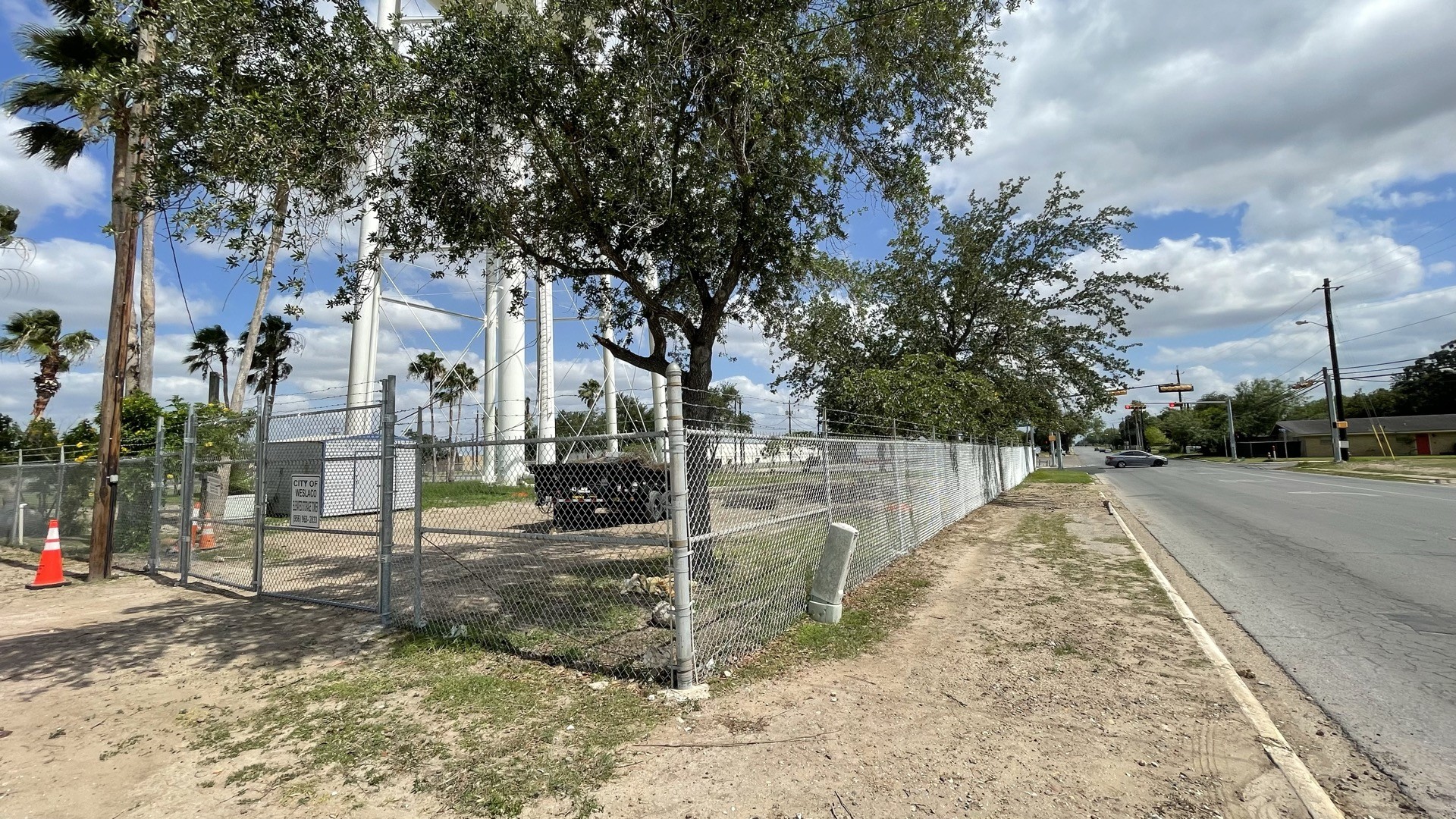
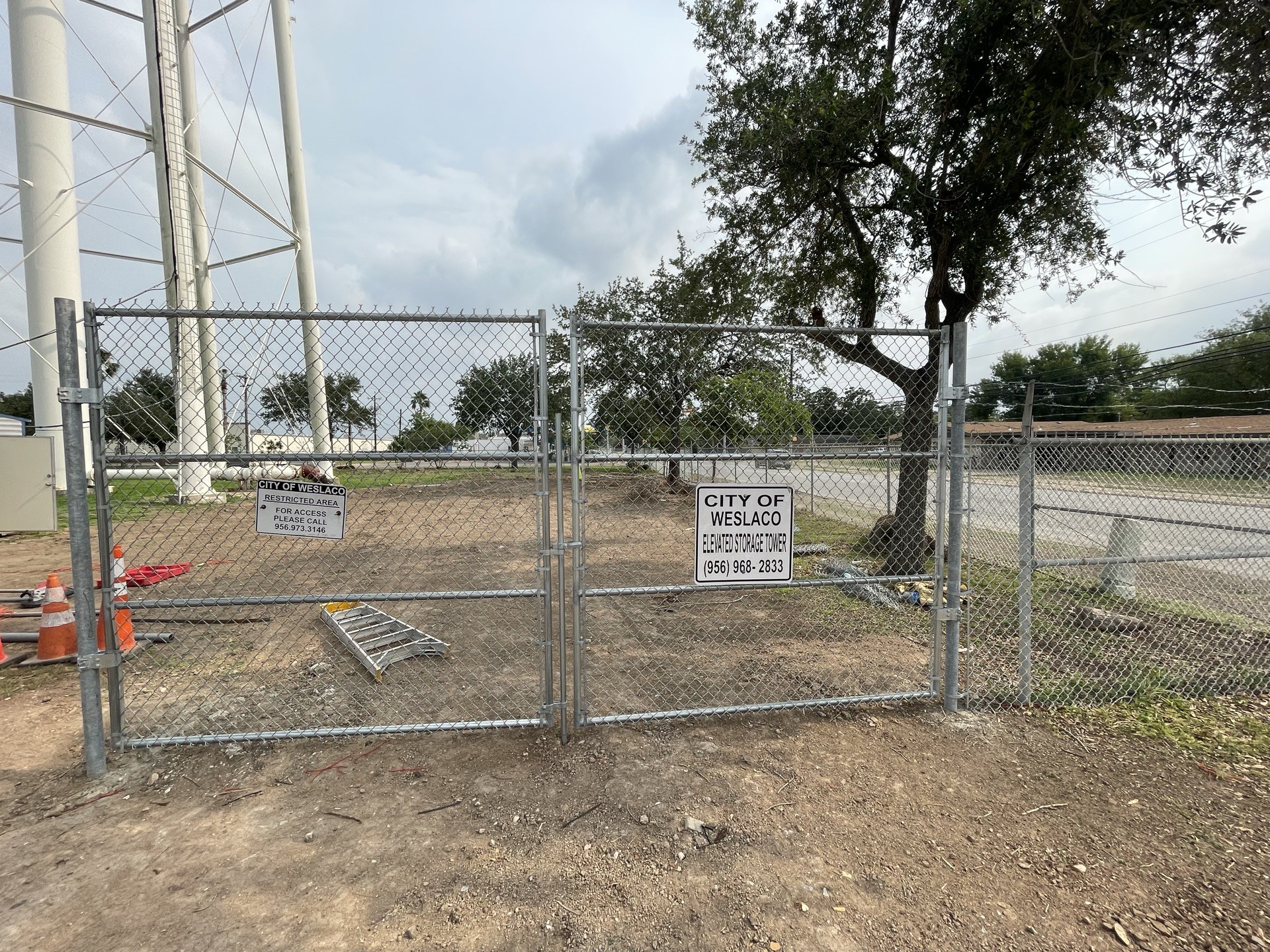
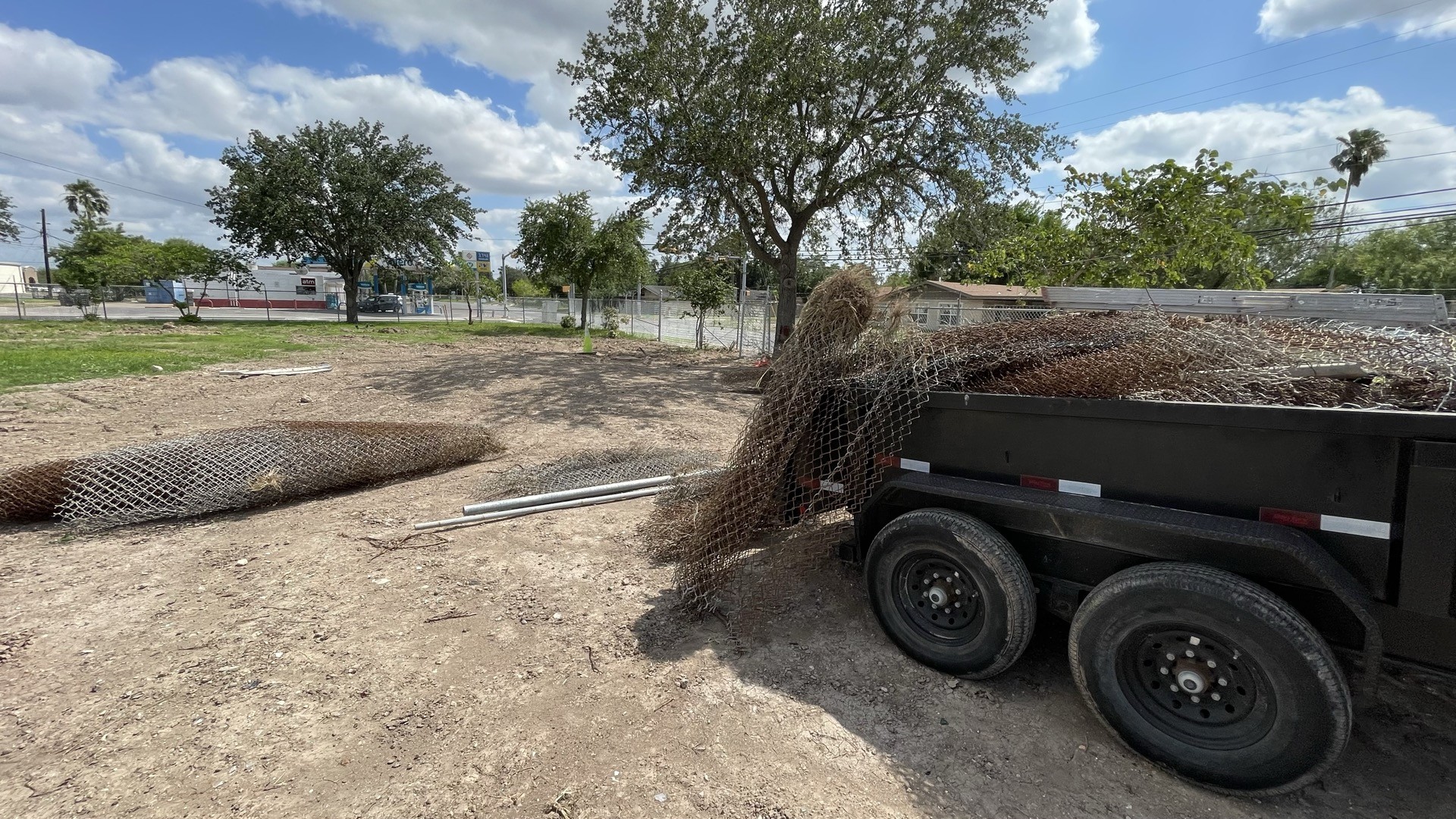
The chain link fence and gate gallery at the Weslaco water tower shows that relationship well. The photographs show the fence beside the road, an entrance with two gate leaves and removed chain link material at the site. They document visible work without establishing the original design brief, exact specifications or a municipal endorsement.
Read the perimeter as a complete route
The corner view shows chain link continuing along the roadside while the entrance sits on the adjoining run. Looking only at the gate would miss that relationship. For your own property, trace the whole proposed boundary and mark where it changes direction, meets an existing fence or approaches a building.
Then compare that line with the routes people and vehicles already use. A fence might separate a storage area, equipment yard or another working space, but it still has to accommodate the activities that belong there. Describe those activities to the estimator instead of assuming that the current opening is in the best position.
Define access before selecting the gate arrangement
The entrance photograph shows a double chain link gate. That is a visible design detail, rather than proof of a particular opening width or vehicle capacity. On another site, a useful starting question is who needs access, how often and with what equipment.
Separate routine access from occasional access
Staff on foot may use an entrance differently from a delivery vehicle or maintenance crew. List those uses separately. Discuss where vehicles approach, where they wait, where the gate leaves can move and whether a separate pedestrian entry would make the daily route clearer. The appropriate arrangement depends on the actual space and the proposed gate design.
Also decide who will manage the entrance. Ask how the latch or locking arrangement will be selected and who needs to use it. Share any operating requirements supplied by the property manager. A contractor can review those requirements with the site; a photograph cannot confirm that another property’s operating rules are the same.
Decide whether visibility is part of the goal
Chain link leaves a view through the boundary. In this gallery, the water tower and portions of the site remain visible beyond the fence. That open appearance can be a reason to discuss chain link when the aim is to define a space without a solid visual screen.
If screening is also important, identify exactly where you want it and explain why. Do not assume that adding a screen to any chain link design is a simple cosmetic change. Ask the contractor to review available options and the complete fence design before making that choice. Avoid selecting a whole perimeter solely from the appearance of one photo.
Include removal and site access in the scope
The gallery also includes rolls of removed chain link fabric beside and on a trailer. That image is a useful reminder to discuss what happens to existing material. It does not show every stage of the work or prove a completion timeline.
For a replacement project, clarify which fence runs and gates are included, what material will be removed, and where the crew and hauling equipment can enter. If the property needs continued access during the work, explain that requirement early so the proposed sequence can be discussed. Record any areas or entrances that are outside the requested scope.
See our chain link fence service and Weslaco fence installation page for related planning information. Guerrero Fences serves the Rio Grande Valley, with any travel costs discussed in the estimate.
Review your perimeter and entrance together. Schedule an estimate visit for your property, or call Guerrero Fences at (956) 904-0308.